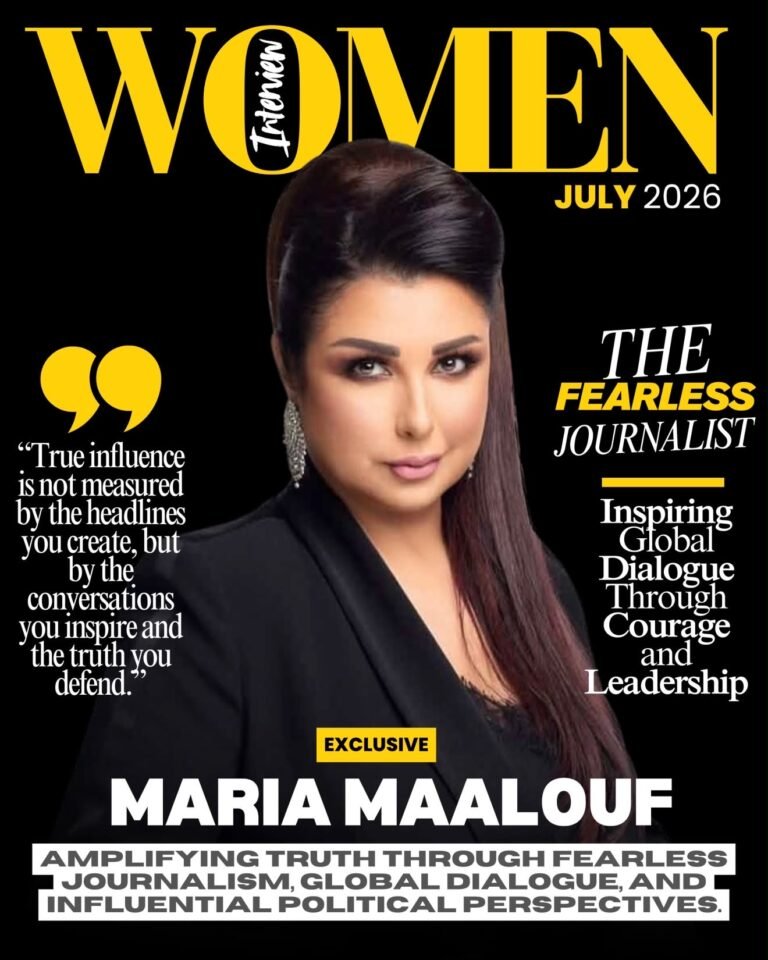
Some journalists report history. Others become part of it.
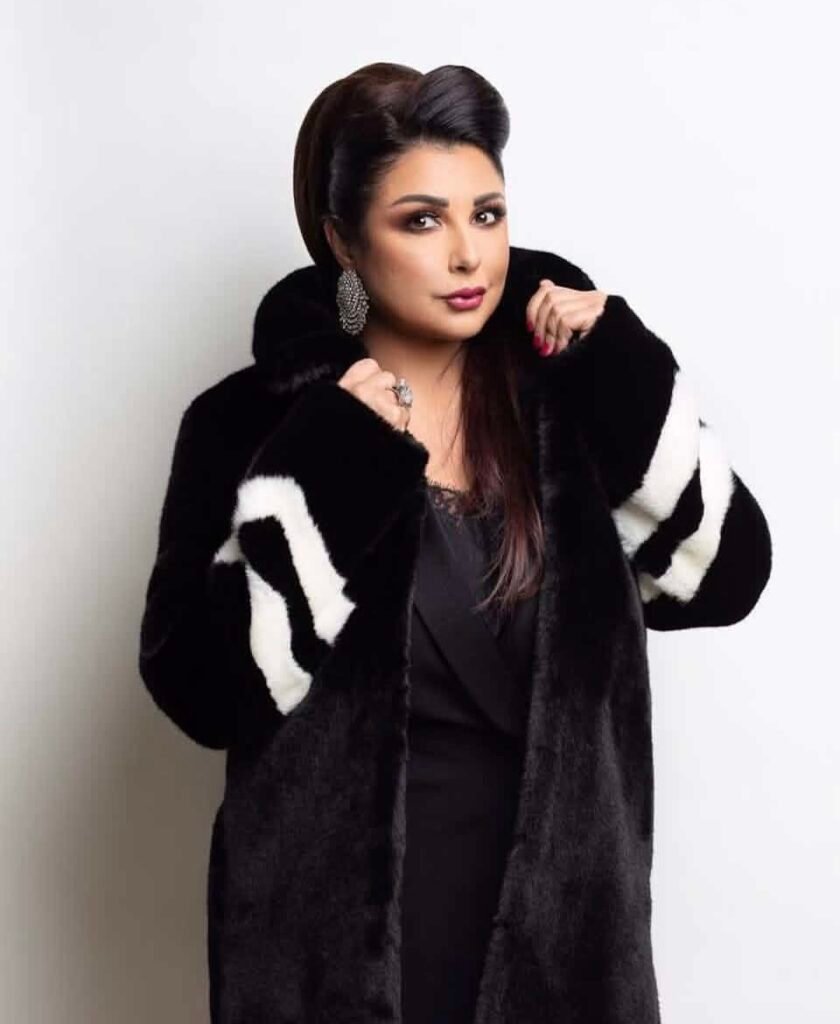
For more than two decades, Maria Maalouf has stood at the center of some of the Middle East’s most consequential political conversations. As a Lebanese-American journalist, political analyst, television host, publisher, author, and human rights advocate, she has dedicated her career to exploring complex geopolitical issues while engaging with leaders, diplomats, policymakers, and intellectuals across the world.
Born in Zahle, Lebanon, Maria’s childhood unfolded during one of the country’s darkest chapters. Growing up amid the Lebanese Civil War exposed her to conflict, political instability, and the realities of a nation struggling to preserve its identity. Those experiences would ultimately shape the fearless journalist she would become.
Rather than allowing war to define her future, she transformed those experiences into a lifelong commitment to journalism, public dialogue, and political analysis.
Throughout her remarkable career, Maria has broken barriers across Arab media. She founded Dar Al-Khaleej Publishing House in Lebanon and launched several influential publications, including Mir’at Al-Khaleej. She also became the first woman to serve as Editor-in-Chief of the Lebanese political daily newspaper Al-Rouwad, marking an important milestone for women in regional journalism.
Her television career expanded rapidly through the political talk show Bila Raqib (“Without Censorship”), which aired on Lebanon’s New TV and Libya’s Al-Mutawassat. The program welcomed more than 2,000 guests over the years, including presidents, prime ministers, cabinet ministers, diplomats, military leaders, renowned scholars, and international policymakers.
Her interviews span an extraordinary range of historic figures, including former Palestinian President Yasser Arafat, Bosnian President Alija Izetbegović, Lebanese Presidents Michel Aoun, Amin Gemayel, and Elias Hrawi, former U.S. Secretary of State Madeleine Albright, political scientist Francis Fukuyama, former U.S. National Security Advisor Zbigniew Brzezinski, and numerous senior officials from Saudi Arabia, the United Arab Emirates, and across the Gulf region.
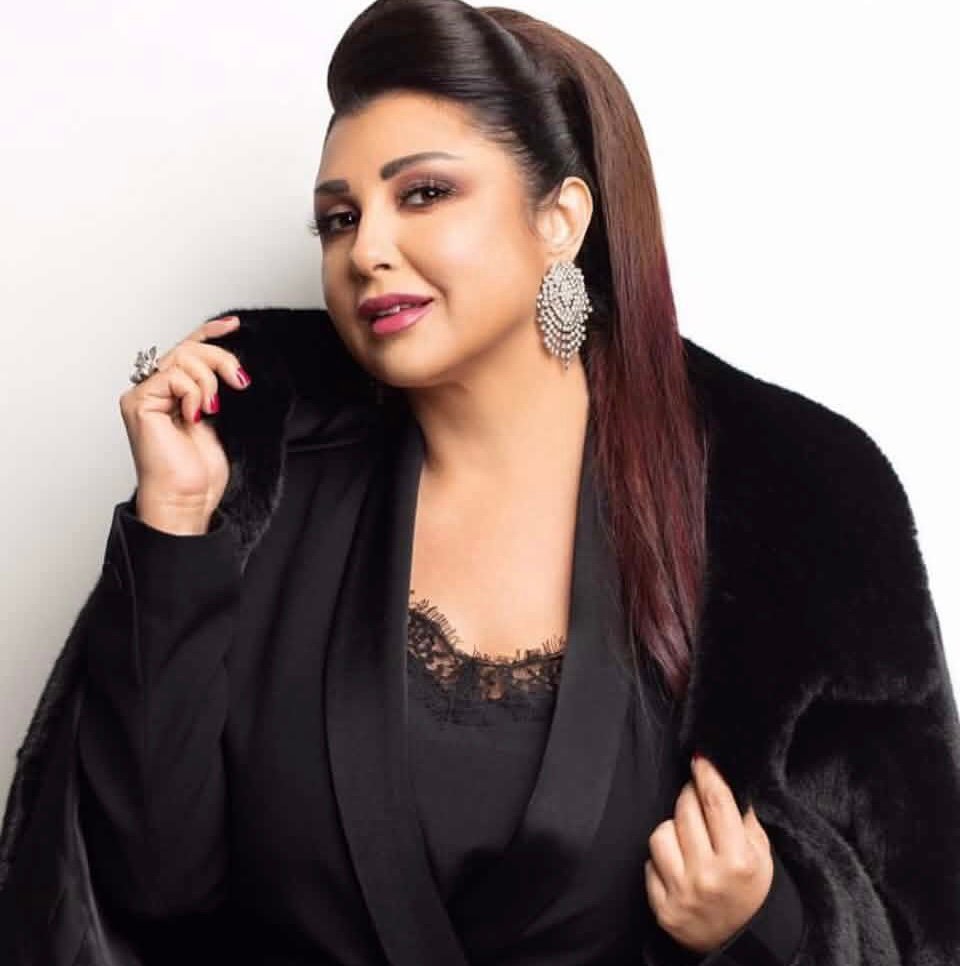
As the media landscape evolved, Maria expanded her influence internationally through The Capitol Show, an independent platform based in Washington, D.C. The program features conversations with U.S. lawmakers, diplomats, security experts, Arab reformers, and global thought leaders, offering audiences in-depth discussions on international affairs, regional security, and public policy.
Her recent interviews have included prominent American political figures such as General Michael Flynn, former National Security Advisor Mike Waltz, Congressman Joe Wilson, Congressman Byron Donalds, Congressman Brad Schneider, and other influential policymakers.
Maria’s career has also been defined by her outspoken political positions and advocacy for freedom of expression. Her criticism of Hezbollah, Iranian influence, and authoritarian governance has made her one of the region’s most recognized and debated media personalities. These positions have resulted in legal challenges and political controversy, eventually leading her to continue much of her work from Washington, D.C., where she remains active in international political dialogue.
Alongside journalism, Maria has become a recognized advocate for human rights, interfaith dialogue, and diplomacy. She is a Certified Human Rights Consultant with an official USIDHR Consultant ID and has worked to promote dialogue between cultures while advocating for freedom of expression across the Middle East and internationally.
Her achievements have earned widespread recognition from governments, international organizations, and professional institutions. Among her honors are the Shield of the Oman Council, the Medal of the State of Maryland in the United States, the Medal of Lebanon for Journalism and Media, the Shield of the Arab-European Center for Human Rights in Austria, and the commemorative shield of Lebanon’s National Cedar Movement.
In 2025, Maria was honored by the American Muslim & Multifaith Women’s Empowerment Council (AMMWEC) in Washington, D.C., for her contributions to journalism, women’s empowerment, human rights, and interfaith advocacy. During the same year, she also received the International Certificate for Leadership & Innovation from the Arab-European Center of Human Rights and International Law in Norway in recognition of her work promoting peace, tolerance, and humanitarian values through media.
Her influence extends beyond awards. Maria has repeatedly been recognized among Arabian Business’ Power 100, Power List 500, and the 100 Most Powerful Arab Women rankings. In 2022, The Algemeiner included her among its “Top 100 People Positively Influencing Jewish Life” for promoting Arab-Jewish understanding. She has also been honored for multiple consecutive years by the Lebanese Press Syndicate as one of the country’s boldest journalists and has received recognition as “Woman of the Year.”
Today, Maria Maalouf continues to bridge journalism, diplomacy, and public discourse at a time when global conversations have never been more interconnected. Whether interviewing world leaders, analyzing international developments, or advocating for dialogue across cultures, she remains committed to encouraging open discussion on issues that shape nations and societies.
In an era often defined by polarization and competing narratives, Maria Maalouf has built a career around asking difficult questions, engaging influential voices, and participating in conversations that extend far beyond borders. Her journey reflects resilience, determination, and an enduring belief that journalism can remain a powerful force in shaping public understanding and fostering meaningful dialogue.